Division 11 – Equipment

crane is a tall metal structure with a long horizontal arm, used for lifting and moving heavy objects.

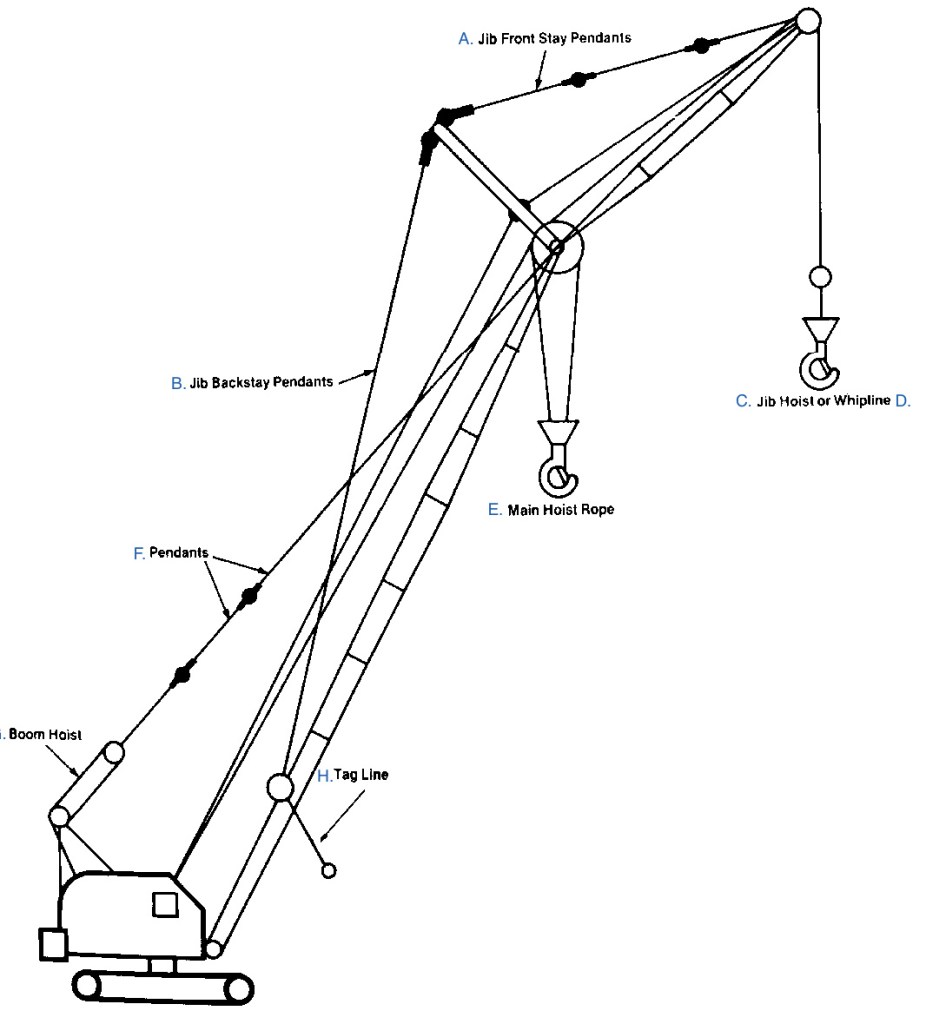
crane is a type of machine, generally equipped with a hoist ropewire ropes or chains, and sheaves, that can be used both to lift and lower materials and to move them horizontally.

It is mainly used for lifting heavy objects and transporting them to other places. The device uses one or more simple machines to create mechanical advantage and thus move loads beyond the normal capability of a human.

Cranes are commonly employed in transportation for the loading and unloading of freight, in construction for the movement of materials, and in manufacturing for the assembling of heavy equipment.

Cranes simulate the human knuckle, by lifting and placing items into position.

Cranes were originally powered by humans and other animals. 90% of the worlds trade takes place on water.

Most items we acquire in Bermuda are craned.

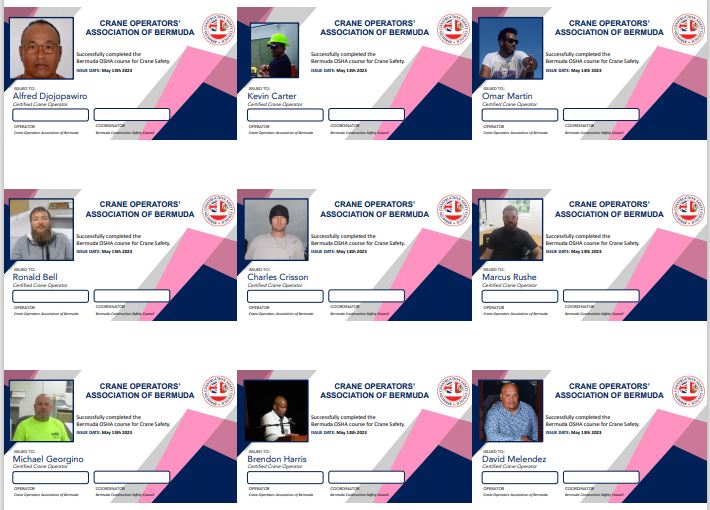
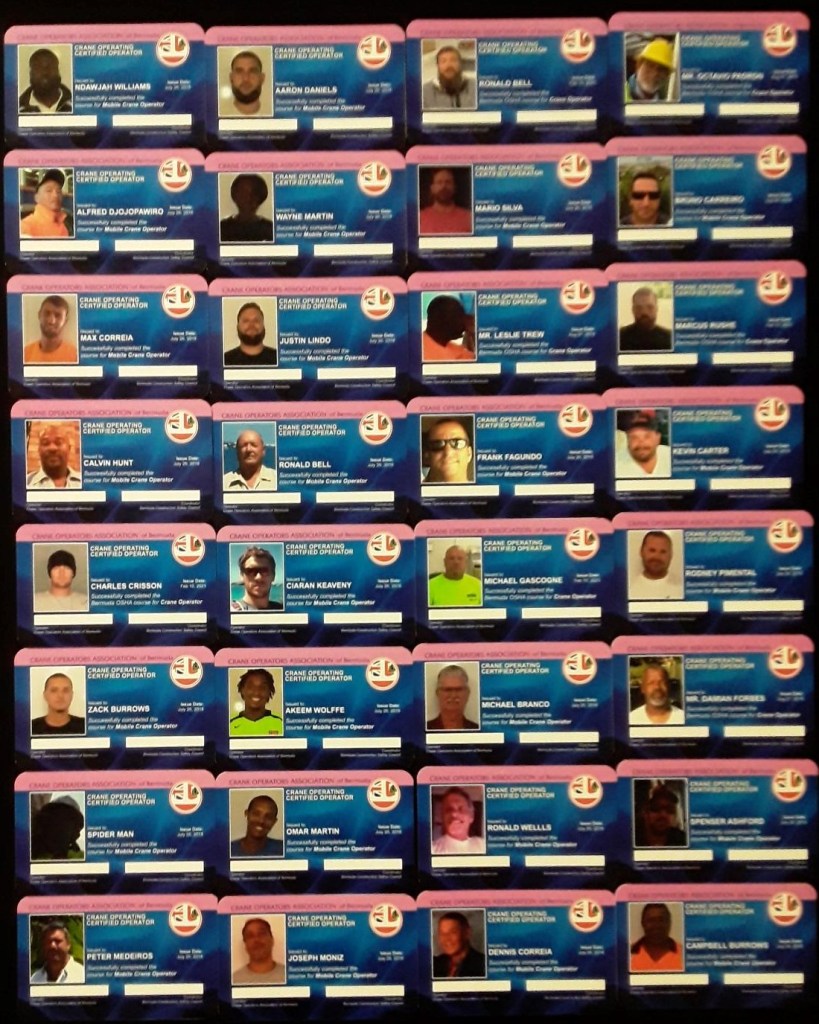
The Crane Operators Association of Bermuda was formulated to standardize and regulate crane education, inspections and certifications.

Cranes were originally made from wood. From ancient times through the medieval periods. The earliest archaeological findings of cranes are in Greece. Cranes were used for the building of homes and tall buildings.

Evidence of the change from wood to metal came during the Industrial Revolution in Great Britain which developed the use of iron and steel metals for manufacturing plants, the production of goods and ship building in the during the 19 century with the use of steam power.

From the early 1900s steam was gradually superseded by electric and diesel power beginning in the late 1930s becoming more prominent in the United States of America which further developed the use of cranes.

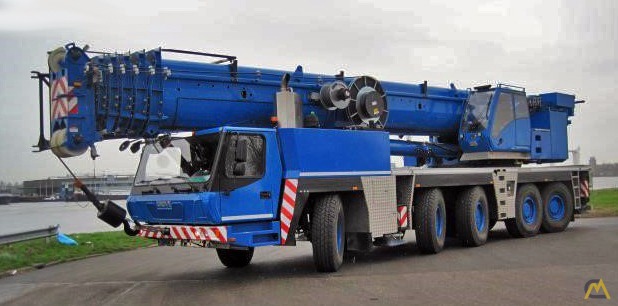
Mobile cranes and Tower cranes are commonly found In Bermuda were we utilize the most common uses of cranes for their ability to offload cargo, and to help build buildings. Mobile cranes are usually classified under Crawler, Truck crane, Rough terrain and All terrain.

Truck-mounted cranes have two parts: the carrier, often referred to as the lower, and the lifting component which includes the boom, referred to as the upper. These are connected together through a turntable, allowing the upper to swing from side to side.

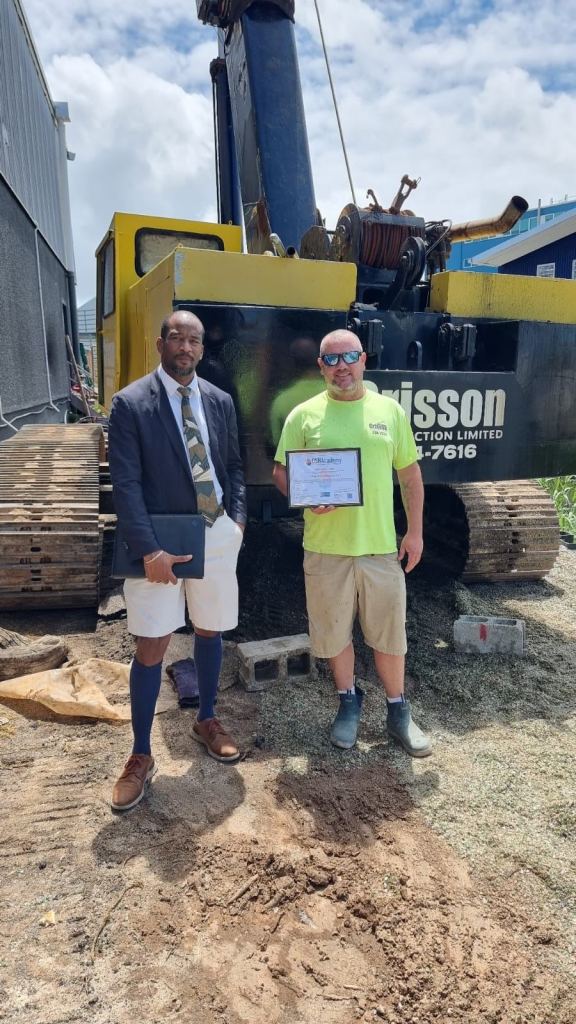
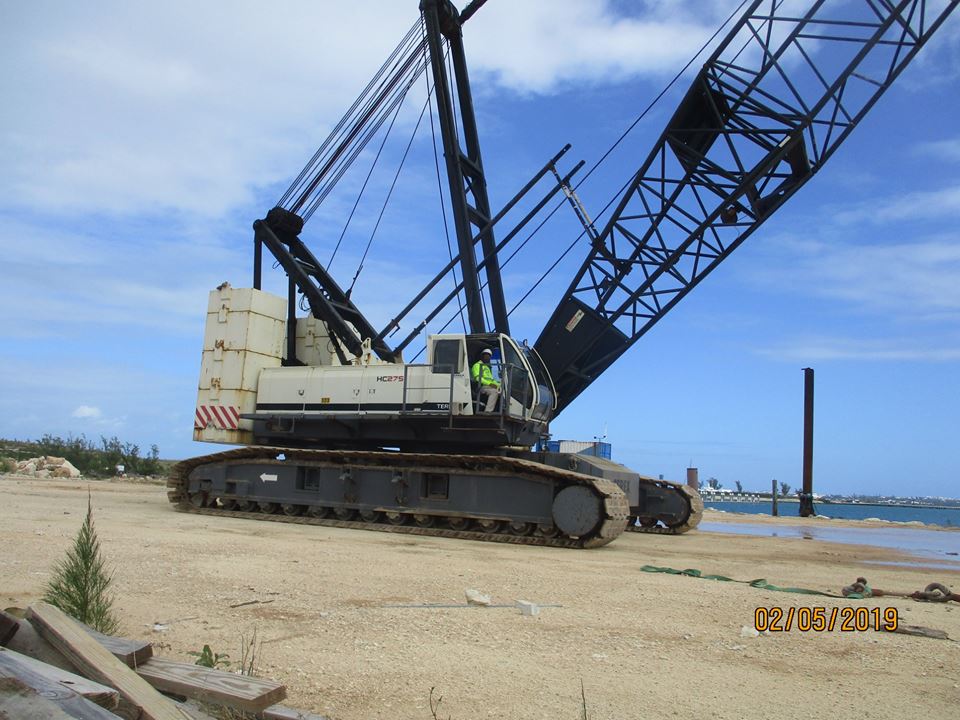
Crawler cranes can be seen on the docks and are used to offload goods being shipped to Bermuda from abroad.

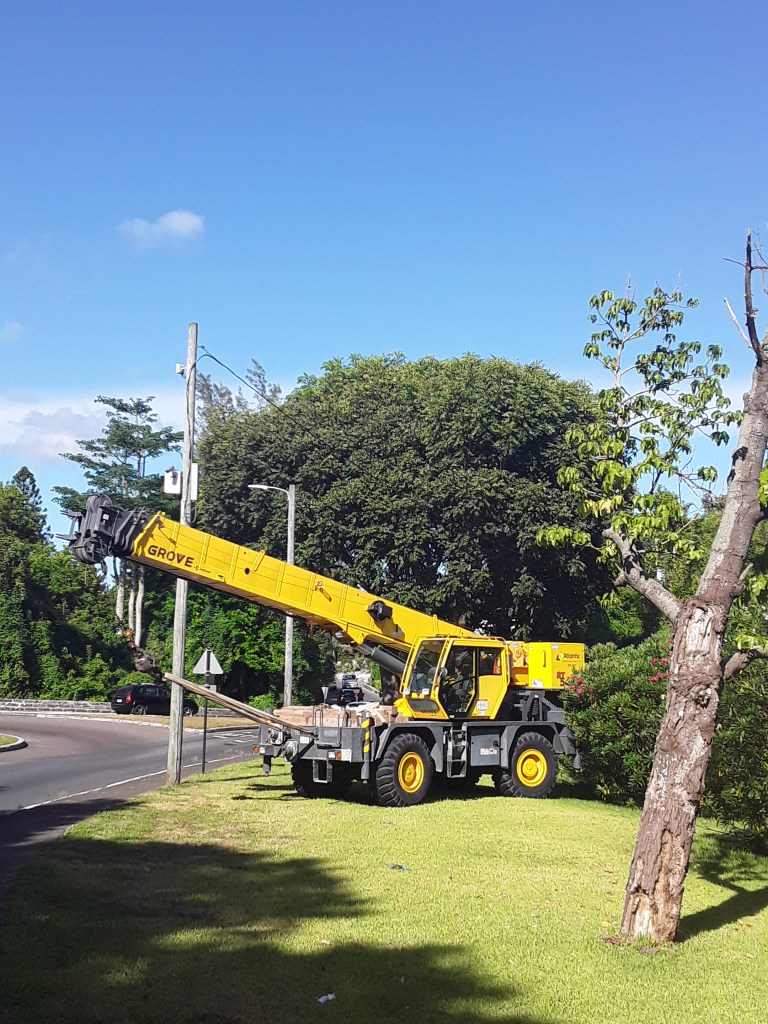
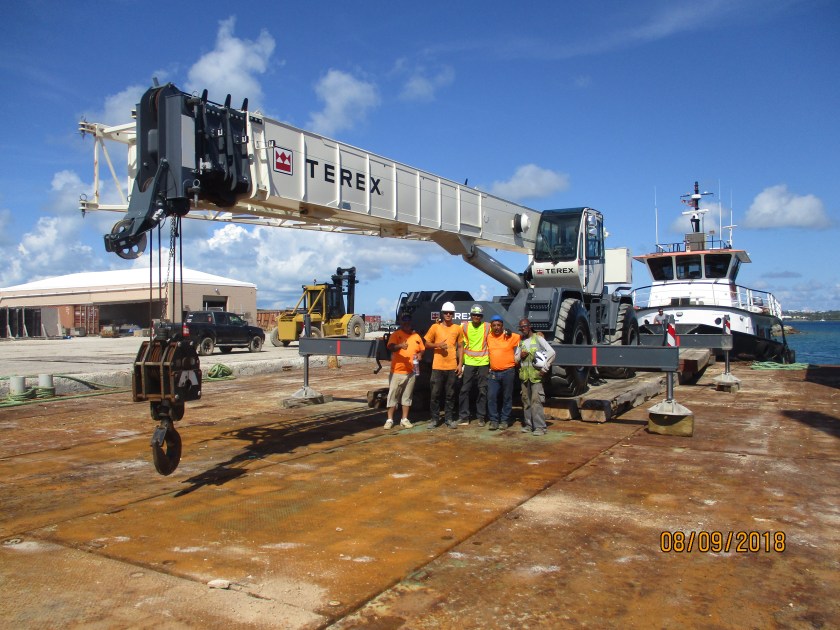
Rough terrain cranes generally have 4 wheels, 4 wheel drive and 4 wheel steering, a boom   mounted on an undercarriage and outriggers used for stability. Mobile cranes are good for getting into small areas commonly have a single diesel engine.

A Crane is a type of machine, generally equipped with a hoist rope, wire ropes or chains, and sheaves, that can be used both to lift and lower materials and to move them horizontally. It is mainly used for lifting heavy things and transporting them to other places. The device uses one or more simple machines to create mechanical advantage and thus move loads beyond the normal capability of a human. Cranes are commonly employed in the transport industry for the loading and unloading of freight, in the construction industry for the movement of materials, and in the manufacturing industry for the assembling of heavy equipment.
26169684_914087838748468_4779537867924351214_n

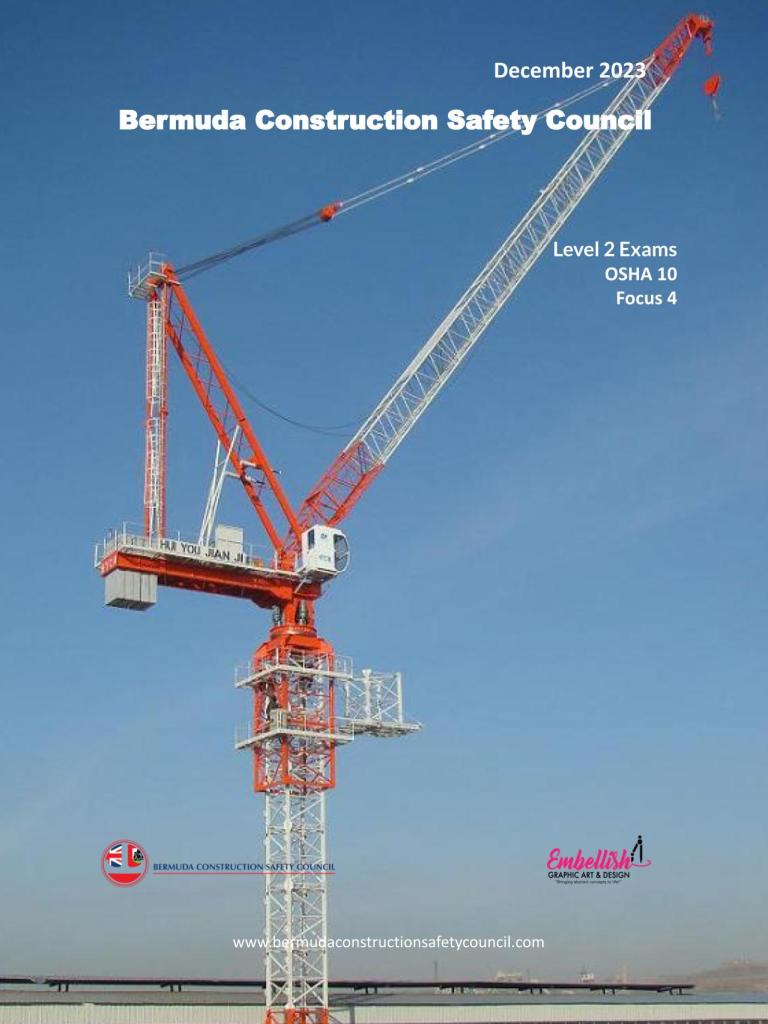
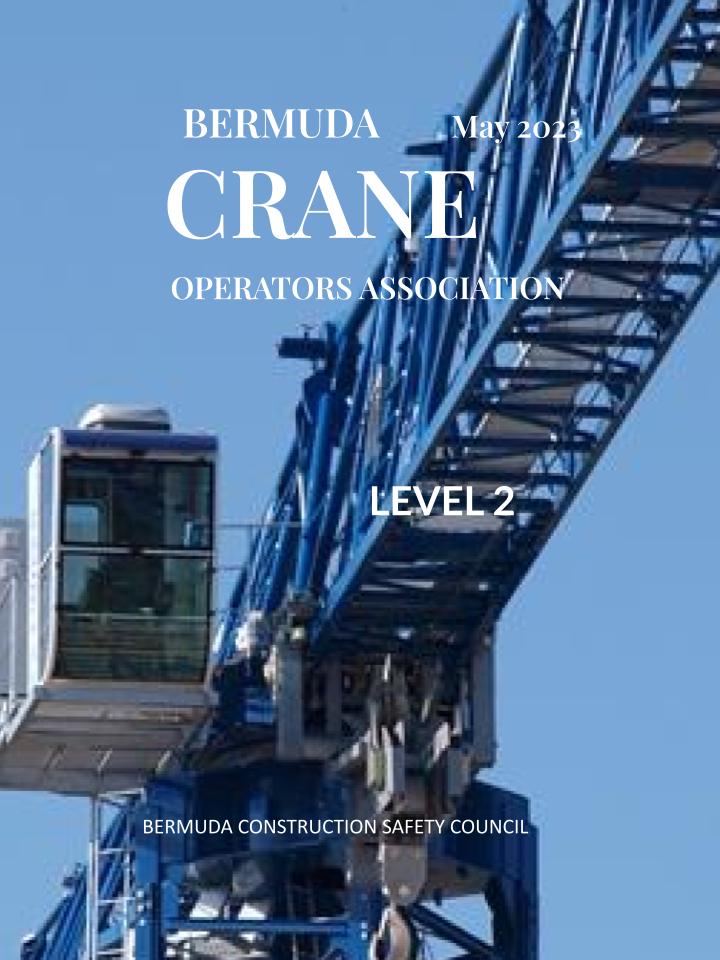
Tower Crane – Hammerhead

The first known construction cranes were invented by the Ancient Greeks and were powered by men or beasts of burden, such as donkeys. These cranes were used for the construction of tall buildings. Larger cranes were later developed, employing the use of human treadwheels, permitting the lifting of heavier weights. In the High Middle Ages, harbour cranes were introduced to load and unload ships and assist with their construction – some were built into stone towers for extra strength and stability. The earliest cranes were constructed from wood, but cast iron, iron and steel took over with the coming of the Industrial Revolution.
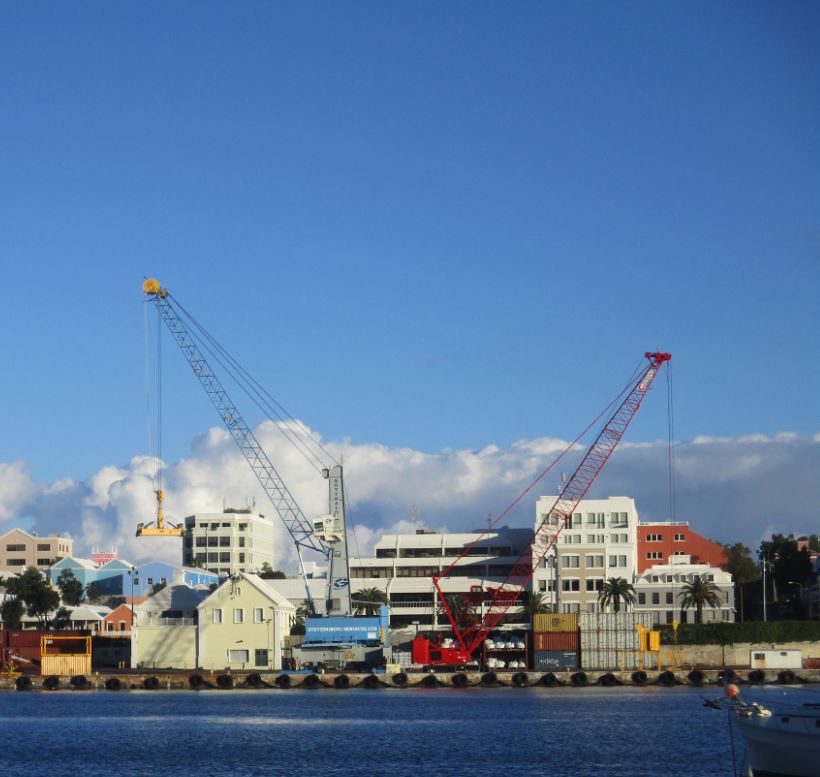
Boom Lattice

For many centuries, power was supplied by the physical exertion of men or animals, although hoists in watermills and windmills could be driven by the harnessed natural power. The first ‘mechanical’ power was provided by steam engines, the earliest steam crane being introduced in the 18th or 19th century, with many remaining in use well into the late 20th century[citation needed]. Modern cranes usually use internal combustion engines or electric motors and hydraulic systems to provide a much greater lifting capability than was previously possible, although manual cranes are still utilized where the provision of power would be uneconomic.
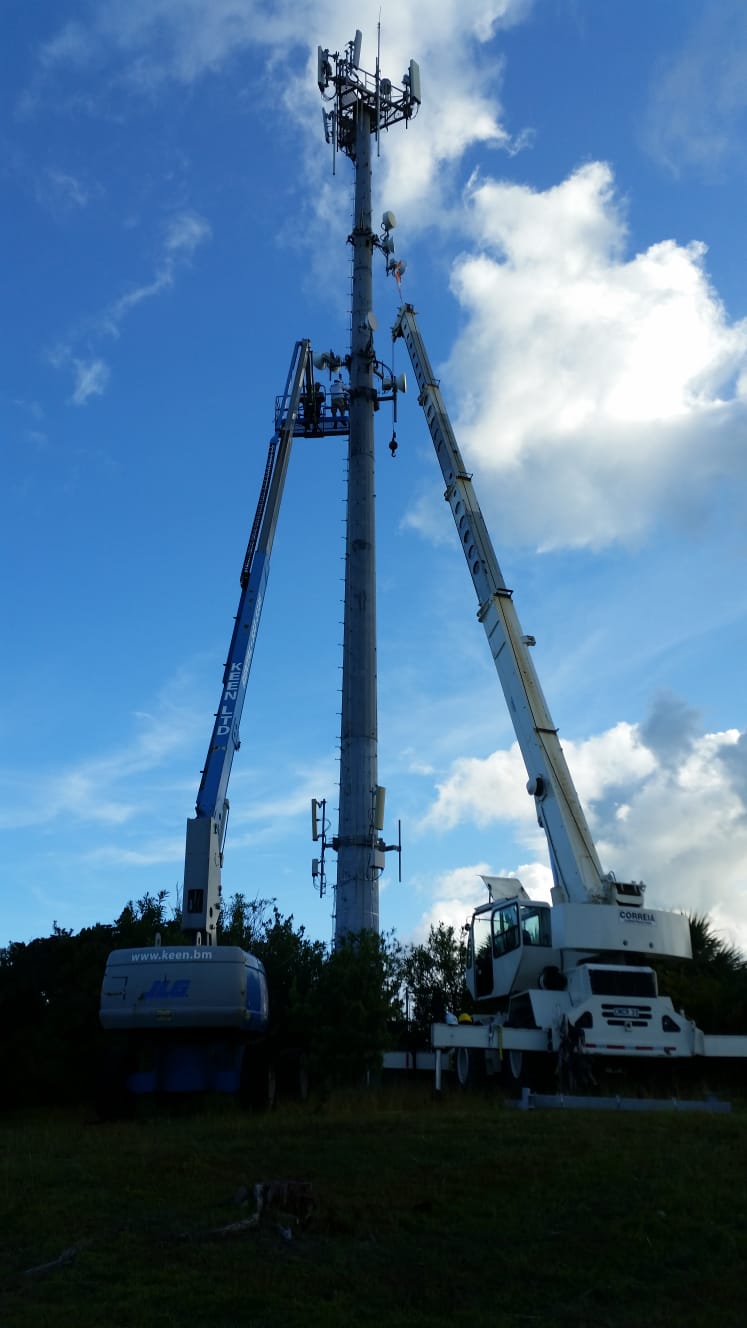
Mobile Crane

Cranes exist in an enormous variety of forms – each tailored to a specific use. Sizes range from the smallest jib cranes, used inside workshops, to the tallest tower cranes, used for constructing high buildings. Mini-cranes are also used for constructing high buildings, in order to facilitate constructions by reaching tight spaces.
IMG-20181010-WA0004

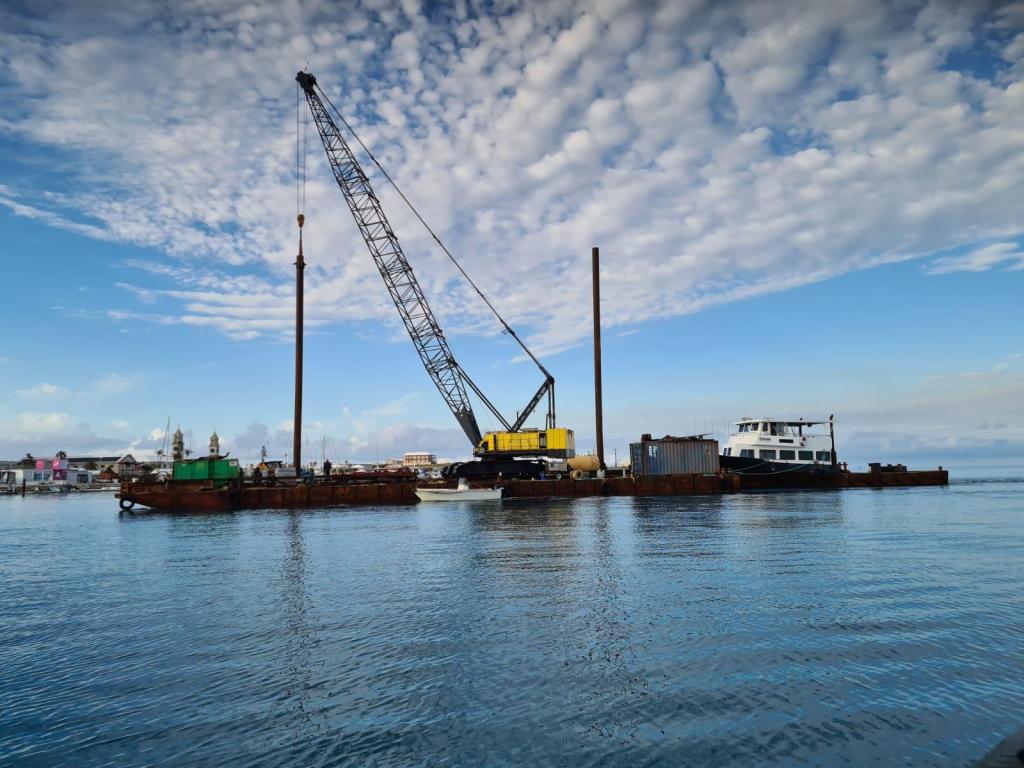
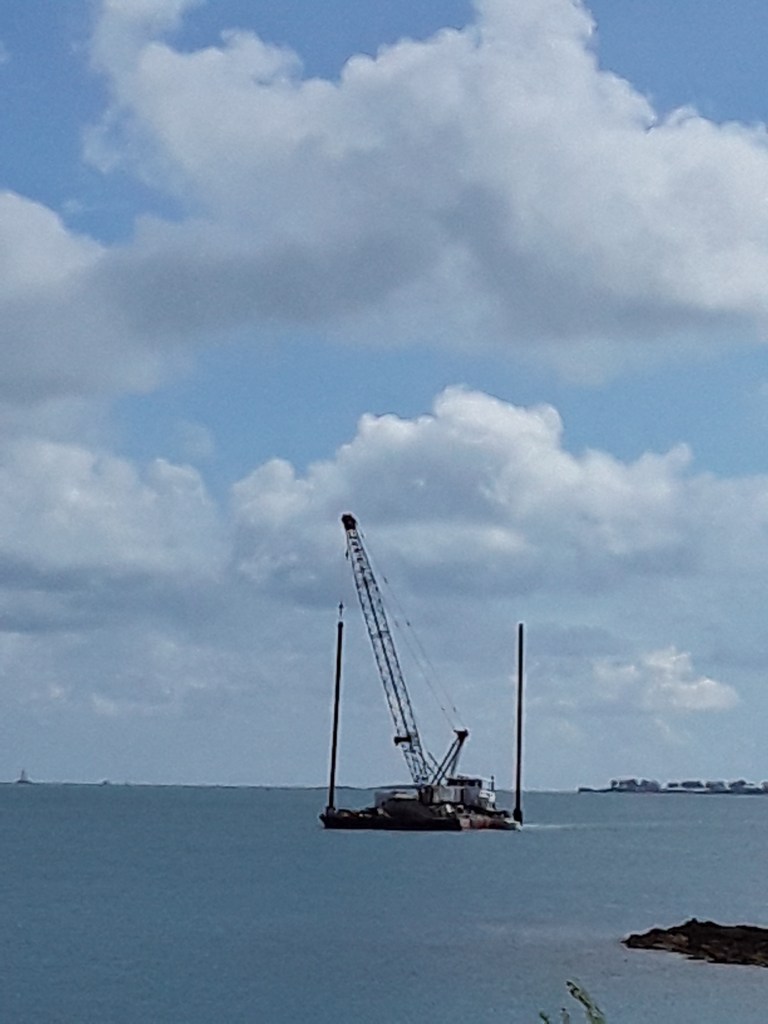
Finally, we can find larger floating cranes, generally used to build oil rigs and salvage sunken ships.

Some lifting machines do not strictly fit the above definition of a crane, but are generally known as cranes, such as stacker cranes and loader cranes.

The Crane Operators Association was formulated to provide a resource of educational information for crane operators, riggers and all those working in the vicinity of crane activity.
Capture

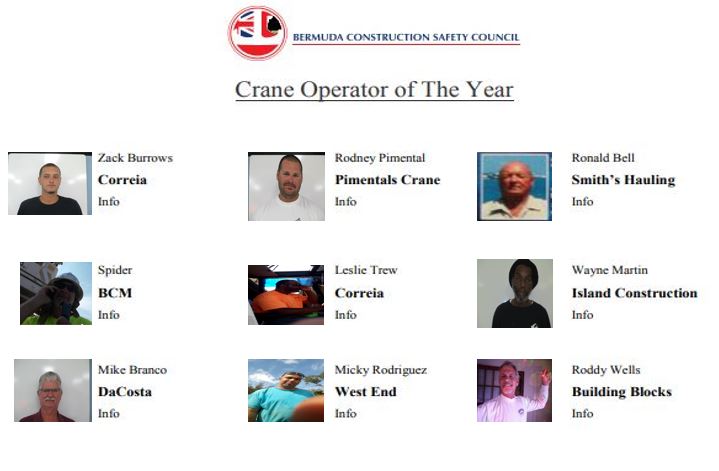
Crane Operators Association of Bermuda

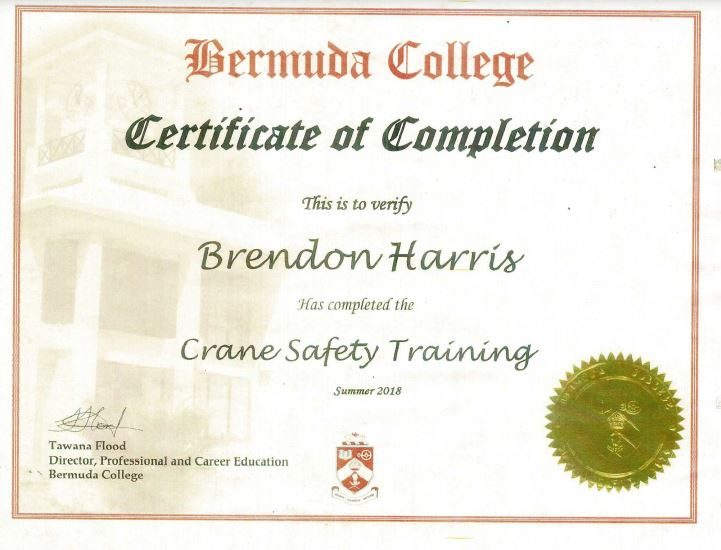
Crane and Derrick Safety OSHAcademy Bda College

Crane Equipment Checksheet

Copy of Pile Driving Activity Hazard Analysis

Crane tool box talk

Boom lift tool box

BCSC quiz Aerial lift

Cranes BCSC quiz 

TCD Mobile Crane Checksheet

All Terrain cranes version of a mobile hydraulic crane. All terrain cranes are essentially a hybrid between a mobile truck crane and a rough terrain crane. They are used to build other cranes.
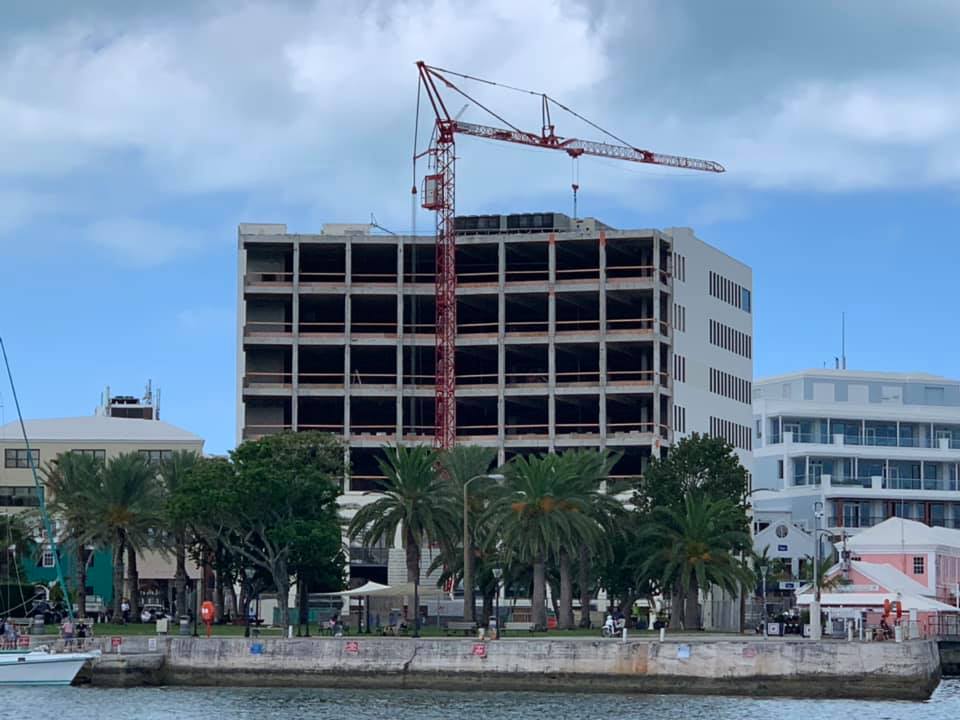
Tower cranes are fixed to the ground on a concrete slab, the base is attached to the mast which is erected to give it its height. The slewing unit is attached to the mast for rotation. The operator’s cabin and jib are attached to the top of the slewing unit. The crane rotates on its axis before lowering the lifting hook. Tower cranes are also a common feature when building commercial buildings and they often use electrical power.
Riggers communicate with the operator to control the crane by radio remote control from the ground. They are most often in radio contact, and always use hand signals. The rigger directs the schedule of lifts for the crane and is responsible for the safety of the loads. For more on Crane Operator certifications contact PACE at the Bermuda College.
Cranes are made of welded metal structures that can often be extended for many years by aftertreatment of welding. Lifting loads can be significantly increased by proper welding. For more on welding persons can contact the National Certification Program.
Division 12 – Furnishings

Interior design is the art and science of enhancing the interior of a building to achieve a healthier and more aesthetically pleasing environment for the people using the space.

An interior designer is someone who plans, researches, coordinates, and manages such projects. Interior design is a multifaceted profession that includes conceptual development, space planning, site inspections, programming, research, communicating with the stakeholders of a project, construction management, and execution of the design.

Division 12 Furnishings encompasses a broad grouping of objects that are installed in finished spaces and considered to be decorative or fine art.

Used in any type of built space, they may function to support human activity and/or be aesthetically pleasing.

They can be selected by an interior designer, specified by an architect or placed by a discerning homeowner. With proper selection, scale and scheme, furnishings complement a space’s interior finishes and define its style.

BCSC quiz Furnishings

Division 13 – Special Construction

mosque elev

Division 13 Special Construction addresses structures designed for a very specific end-use, such as a greenhouse, which require detailed construction specifications and methods tailored to that unique building function. It also includes the installation of similarly specified and particular sub-systems, such as a bank vault, within conventionally constructed buildings.
Division 13 construction projects tend to require professional insight and construction expertise, making them more expensive to design and build than standard projects.

Division 13 structures and systems often offer less flexibility for future space re-utilization because of the unique nature of their original design intent.

BCSC quiz Precast

Division 14 – Conveying

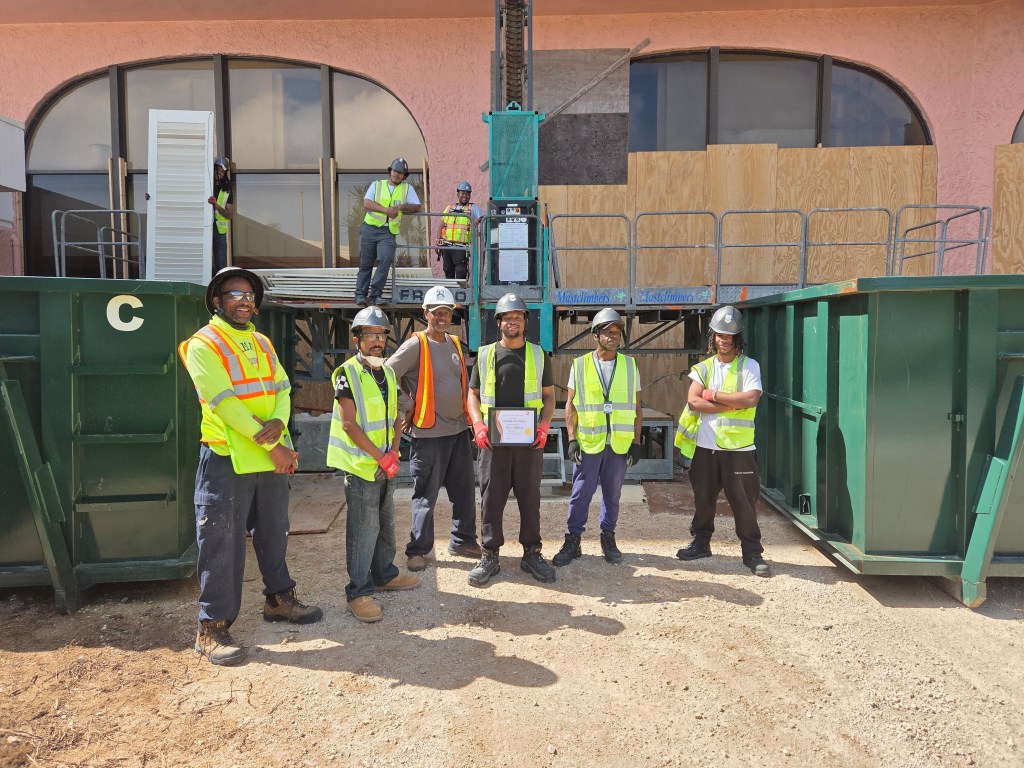
Scaffolding

$CoMmEntÀ

Scaffolding, also called scaffold [1] or staging,[2] is a temporary structure used to support a work crew and materials to aid in the construction, maintenance and repair of buildings, bridges and all other man made structures. Scaffolds are widely used on site to get access to heights and areas that would be otherwise hard to get to.[3] Unsafe scaffolding has the potential to result in death or serious injury. Scaffolding is also used in adapted forms for formwork and shoring, grandstand seating, concert stages, access/viewing towers, exhibition stands, ski ramps, half pipes and art projects.

A mast climber, also known as a mast climbing work platform (MCWP), is a specialized piece of equipment designed to facilitate safe and efficient access to elevated work areas, such as construction sites, building facades, or …

There are five main types of scaffolding used worldwide today. These are Tube and Coupler (fitting) components, prefabricated modular system scaffold components, H-frame / facade modular system scaffolds, timber scaffolds and bamboo scaffolds (particularly in China). Each type is made from several components which often include:

  • A base jack or plate which is a load-bearing base for the scaffold.
  • The standard, the upright component with connector joins.
  • The ledger, a horizontal brace.
  • The transom, a horizontal cross-section load-bearing component which holds the batten, board, or decking unit.
  • Brace diagonal and/or cross section bracing component.
  • Batten or board decking component used to make the working platform.
  • Coupler, a fitting used to join components together.
  • Scaffold tie, used to tie in the scaffold to structures.
  • Brackets, used to extend the width of working platforms.

Specialized components used to aid in their use as a temporary structure often include heavy duty load bearing transoms, ladders or stairway units for the ingress and egress of the scaffold, beams ladder/unit types used to span obstacles and rubbish chutes used to remove unwanted materials from the scaffold or construction project.

BCSC quiz Scaffolding

Division 15 – Mechanical Systems

Mechanical Systems: Is a division in the CSI Master Format including Plumbing, HVAC, Insulation, Sprinkler systems, Pressure systems and Mold and Asbestos abatement training through PEC Competent for Pressure Systems, H&S pressure systems 2012.

069
  1. Mechanical Systems includes all aspects of division 15 including, Plumbing, Air conditioning, HVAC, Sprinklers, and Gas.
  2. Only qualified employees are authorized to carry out mechanical repairs, maintenance or work.
  3. The correct lock out tag out must be adhered to. No guard to be removed during operation.
  4. All stored energy must be safely released prior to working on equipment, ie air, hydraulic water.
  5. No attempt should be made to ride on conveyors, hoists or any moving machinery.
  6. Caution should be taken when working on equipment and intermeshing gears.
  7. Machine parts can still move even when the power is off.
  8. Inform the responsible safety representative, manager or supervisor if problems arise.
  9. Machine parts, tools, materials, etc must not be left where they may be a danger.
  10. When the job is complete, all guards must be replaced and the equipment re-started by the operator. Any faults detected on start up must be reported to the responsible manager or supervisor.

Plumbing tool box talk

Division 16 – Electrical

Electricity in Bermuda is provided by the Bermuda Electric Light Company Limited (BELCO), which is Bermuda‘s sole supplier of electricity, operating a generating plant and transmission and distribution systems throughout the territory. It is owned by ASCENDANT Group Limited (AG Holdings Limited), as is Bermuda Gas, PureNERGY Renewables, and inVenture Limited.

BELCO’s two generating stations are fueled by heavy fuel oil and diesel, all of which is imported.

Oil is piped directly into the central electricity generating plant via a 9-mile 6 inch underground pipeline from the oil docks terminal.

Solar and other renewable energy sources are not used in Bermuda. In 2009, BELCO used approximately one million barrels of fuel.

The import duty on the oil is very high, and electricity rates are very high by world standards. BELCO’s maximum generation capacity is 165 MW, produced by diesel engines and gas turbines.[1] The highest peak demand was 122.8 MW, recorded in August 2010.[2] Large commercial organizations use about 40% of electricity produced.

Shannon Tymosko is a 2nd year Electrical Apprentice and KickAss Ambassador. She originally completed a Child and Youth work diploma where she found a passion for people, mental health and learning. Throughout her twenties she worked in a shelter for homeless youth, alongside a career in finances where she worked her way through different position ending in a head office job. Sadly, neither of these jobs were careers that allowed her to thrive. She simply survived. In 2017, her best friend Matt purchased a home and wanted to complete renovations. Both of them at the time were what you would call ‘Green’: someone who has no construction experience. With the help of YouTube, friends, and Google they completed several renovation projects. It was through this process she discovered she loved working with her hands. She felt empowered and proud of each new thing she completed. She knew then, this was something she would like to do for a career. Fast forward a few years and she has come to realize, for the first time in her life she has what she considers her ‘Independence’! Being in the skilled trades has given her the confidence, skills, and community to complete any work tasks or tackle home projects. She is blessed to say this journey has also taken her on a route of advocacy as an Ambassador for KickAss careers. This allows her to take her passion for people that she found while being a Child and Youth Worker and combine it with her new love for the trades.

The standard voltage in Bermuda is 120 V and the standard frequency is 60 Hz AC. Flat, two-pronged plugs (Type A) are in use. All US and Canadian appliances work on the island, without voltage converters or adapters.[3]

BICSI is the Global Leader in ICT Education and Certification. BICSI supports the advancement of the information and communications technology (ICT) community.

https://en.wikipedia.org/wiki/Transformer


BCSC quiz Electrical